Your Kid's Tutor Is Now a Machine. That's Either the Best or Worst News of the Year. 📛
AI in classrooms promised personalized learning at scale. What it actually delivered depends entirely on which kid you ask.
By 2024, generative AI had landed in roughly 60% of Indian urban classrooms, one way or another. Homework help. Essay generators. Chatbot tutors whispering answers through phones under desks. The genie isn't going back in the bottle. The only question worth asking now: who is it actually helping?
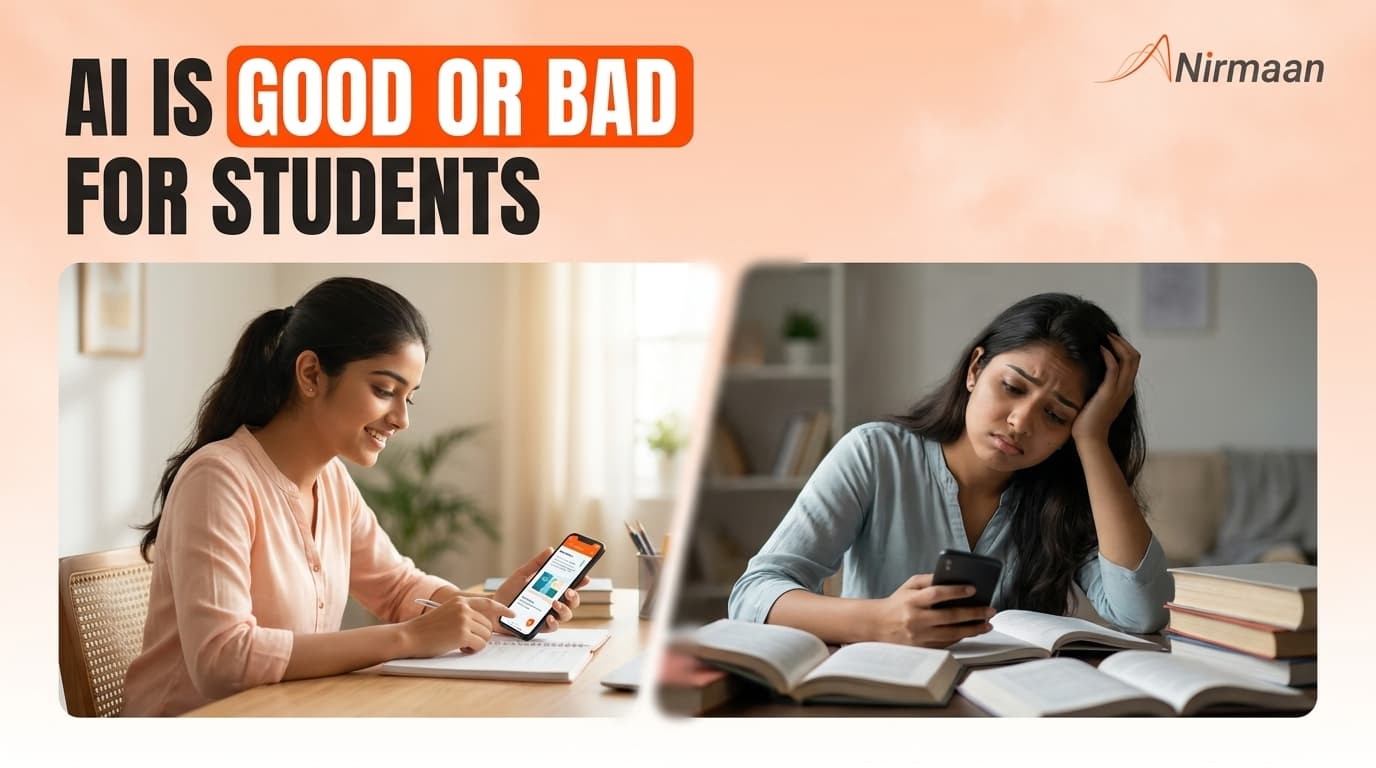
Because here's the uncomfortable split screen. I've spent weeks talking to teachers, students, and researchers across Bengaluru, Delhi, and Hyderabad. The stories don't converge. They fork hard. For some kids, AI is a private tutor that never sleeps, never judges, never moves too fast. For others, it's a crutch that's actively eroding the one skill school was supposed to build: figuring things out yourself. 😅
The real story isn't that AI is good or bad. The real story is that it's both, and the split is widening by income bracket. That's the part nobody's talking about loudly enough.
The Kids AI Is Saving
Let's start with the upside, because it matters.
Take a student in a typical Indian government school. One teacher, fifty-five kids, textbooks that showed up two months late. This kid is bright but missed fractions in Class 5 because he was out harvesting with his family. The class moved on. He's been faking understanding ever since, his confidence calcifying into avoidance.
Now give him a phone with an AI tutor at 9 PM. It doesn't sigh when he asks why denominators match. It doesn't have forty-four other kids waiting. It explains, re-explains, generates practice problems at his actual level, and tracks exactly where he's solid versus shaky. Research from 2023-2024 pilots across India and Kenya showed learning gains of 0.3 to 0.5 standard deviations for students using structured AI tutoring; roughly equivalent to two years of typical schooling compressed into one. That's not hype. That's measurement. 🇮🇳
The mechanism is simple: AI can finally deliver the "personalized learning" that policy documents have promised for decades. It sees the individual gap. It closes it. For kids the system has already failed or never had capacity to serve, this is a genuine lifeline.
See, the promise was never about replacing teachers. It was about visibility. Finally seeing what each child actually knows, in real time, instead of discovering it on an annual exam when nothing can be done.
The Kids AI Is Quietly Ruining
Now the other side. And honestly, this is where I got worried.
Walk into any elite private school in South Delhi or Mumbai's Bandra. The same AI tools are everywhere, but the usage pattern is different. These kids aren't using AI to fill gaps. They're using it to eliminate friction entirely. Essay due? Prompt, paste, paraphrase, submit. Math problem? Screenshot, solve, copy steps without reading them. 📛
Here's a number that stopped me: in a 2024 survey of U.S. college students (and the pattern tracks in Indian metros), 67% reported using generative AI for assignments. But only 12% said they learned more as a result. The majority? "Faster completion with lower engagement." That's not augmentation. That's replacement. And the skills being replaced, decomposition, critical thinking, the struggle of stuckness, are exactly what predicts long-term student performance and adaptation.
The risk isn't that AI makes kids dumb. The risk is it makes them feel smart while systematically depriving them of the productive struggle that builds actual competence. You can't outsource metacognition and expect it to develop anyway.
The table below captures the divergence:
ContextAI's EffectTypical OutcomeUnderserved student, structured AI tutorFills specific learning gaps, adaptive practiceMeasurable learning outcomes improvementPrivileged student, unstructured AI accessCompletes tasks without cognitive engagementSurface performance up, deep learning downAll students, exam pressureShortcuts replace understandingWidening gap between tested and actual ability
The Teacher in the Middle
Teachers I spoke with are exhausted by this binary. They didn't ask for AI surveillance tools or AI essay graders either. What they're watching is a fragmentation of the classroom itself. Half their students use AI like a textbook, carefully, with guidance. Half use it like a venmo for homework, instant transfer, zero effort. And they have no reliable way to tell which is which on a given assignment. 🙏
"I used to know who understood," one Class 9 math teacher told me flatly. "Now I know who can prompt well."
That's a profound shift. Assessment integrity isn't just about cheating. It's about the information teachers use to decide what to teach next. If that signal is corrupted, the entire instructional chain breaks.
What Actually Matters
So is AI good or bad for students? The question is malformed. AI is a mirror.
Where student performance was already robust, structured, supported by involved adults who set boundaries, AI tends to accelerate, deepen, extend. Where learning outcomes were fragile, where engagement was thin, where no adult is monitoring quality of use, AI tends to hollow out the remaining structure and call it efficiency.
The variable isn't the technology. It's the ecology around it.
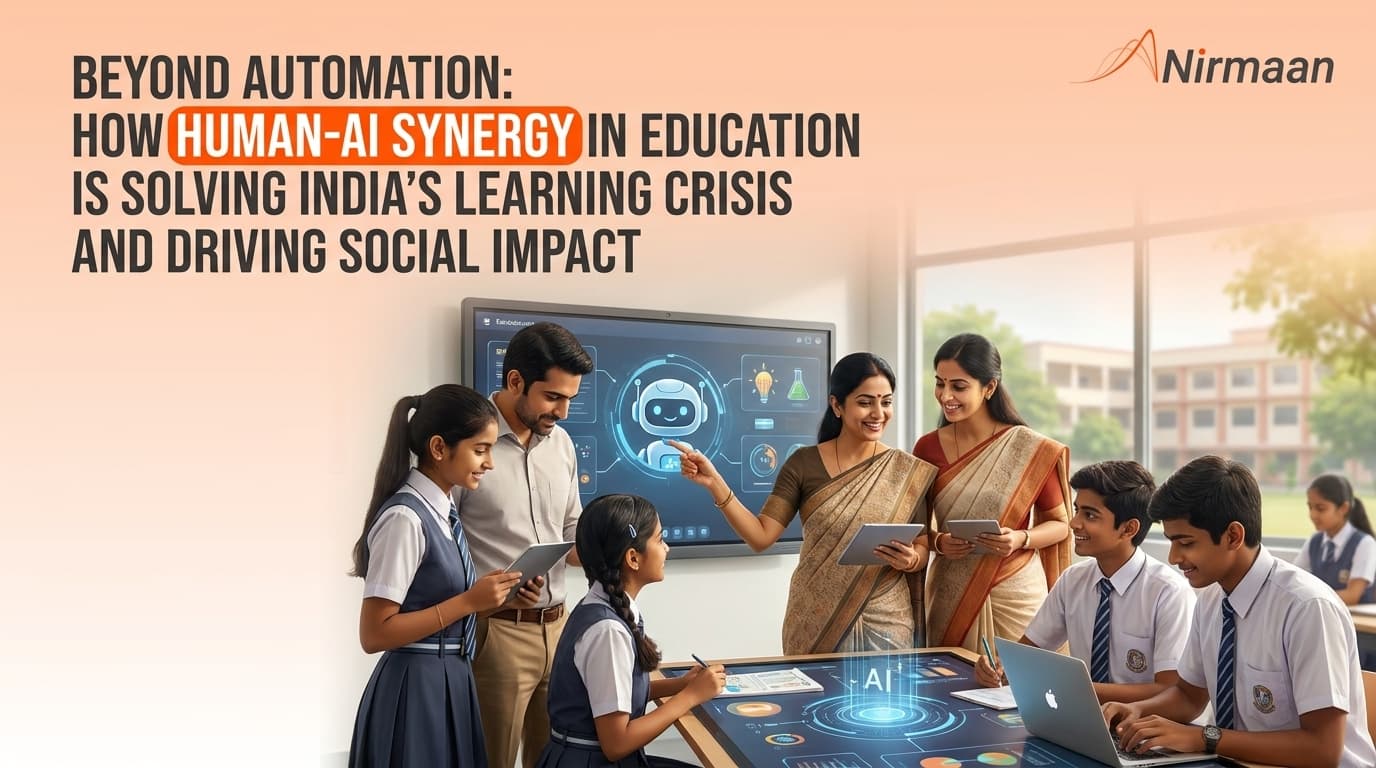
Countries and schools that are seeing genuine gains have one thing in common: AI is deployed inside a pedagogical design, not dropped onto students as a consumer product. It's scoped. It's supervised. There's a human loop. The AI knows the child's history, adjusts to their actual misconceptions, and reports transparently to teachers who still matter.
What we have instead, mostly, is an unregulated flood: ChatGPT for everyone, BYOD policies with no guidance, a generation of students experimenting on themselves while platforms optimize for engagement, not understanding.
Finally
We're not going to uninvent this. Nor should we want to. For millions of kids locked out of quality instruction, AI is the first real shot at catching up. But for millions more, it's becoming a sophisticated way to avoid the work of learning while collecting credentials that say they didn't. 📛
The tragedy would be if we let the latter define the former. If we conclude AI "doesn't work" because we let it be used badly, and close off access for kids who genuinely need it. Or if we celebrate the gains in underserved populations while ignoring the erosion happening in plain sight elsewhere.
Good or bad isn't a feature of the software. It's a feature of the choice architecture we build around it. And right now, we're building that architecture blind, fast, and unevenly. The kids will pay the price either way. The only question is which kids, and whether we notice in time.
References:
Khan Academy / OpenAI pilot study on AI tutoring efficacy, 2023 — https://www.khanacademy.org/research
Stanford HAI, "Generative AI in Education" research review, 2024 — https://hai.stanford.edu/news/generative-ai-education-research-review
Intelligent.com survey: Student AI usage patterns, U.S. 2024 — https://www.intelligent.com
ASER Centre, Annual Status of Education Report 2023 — https://asercentre.org
National Education Policy 2020, Ministry of Education, India — https://www.education.gov.in
P.S. — We're wrestling with exactly this tension at Nirmaan. Our AI is designed to work inside classrooms, not replace them: mapping where each child actually is, flagging to teachers in real time, keeping humans in the loop intentionally. Because we've seen what happens when AI is just dumped on students versus deployed with care. We're piloting now with schools trying to thread that needle. If you're thinking through the same tradeoffs, we'd genuinely love to compare notes.